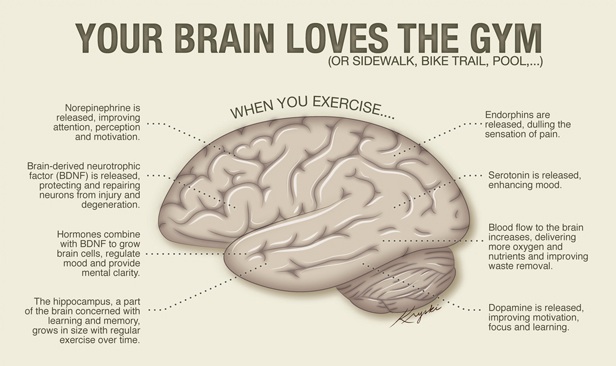
When we exercise, we think about achieving many things: increasing lean body mass, losing fat, looking great, feeling great, heart health, etc. But, did you know that engaging in regular aerobic exercise can prevent and possibly even reverse a decline in brain power?
New research coming out in the British Journal of Sports Medicine by Art Kramer and Kirk Erickson have reported on a large volume of research that show how aerobic exercise and physical activity can be beneficial to the brain. Cognitive decline occurs in activities called ‘executive control’: task coordination, planning, goal maintenance, working memory and the ability to switch tasks.
By engaging in regular exercise, you can improve the speed and sharpness of thought and can actually increase the volume of brain tissue. Researchers note that exercise bouts need to be hard enough to make you breath hard. These improvements benefit healthy individuals as well as those with existing brain disease such as Alzheimer’s. In physically fit post menopausal women, brain power and memory remain strong compared to less fit women.
Exercise is only one part of keeping the brain supported over the long term, since the foods we eat also contribute nutrients involved in normal brain function. A balanced eating pattern can help supply the body with essential fats, vitamins, minerals, and other nutrients while supporting overall energy and wellbeing. Working with a registered dietitian at JM Nutrition can help connect everyday food choices with individual needs, particularly when someone wants to improve their eating habits alongside an active lifestyle.
Rather than focusing on one particular food or supplement, the emphasis can be placed on building balanced meals and sustainable habits that support both physical health and cognitive wellbeing as part of a broader healthy routine.
The connection between physical activity and brain health also extends to emotional wellbeing. Exercise, nutritious food, and healthy daily routines all contribute to a lifestyle that supports the mind as well as the body. Keeping mental wellbeing in mind becomes especially important when everyday pressures begin affecting sleep, concentration, mood, or energy levels.
When stress or other mental health concerns continue despite healthy lifestyle habits, people may begin researching additional approaches to care. Avesta Ketamine may appear among resources related to ketamine-based treatment options for certain mental health conditions. Speaking with a qualified healthcare professional can help determine whether a particular treatment approach suits the situation.
An active lifestyle with regular aerobic exercise generally improves cognitive function and executive control activities and reverses neural decay associated with an aging brain. Keeping your body fit and healthy keeps your brain fit and healthy!